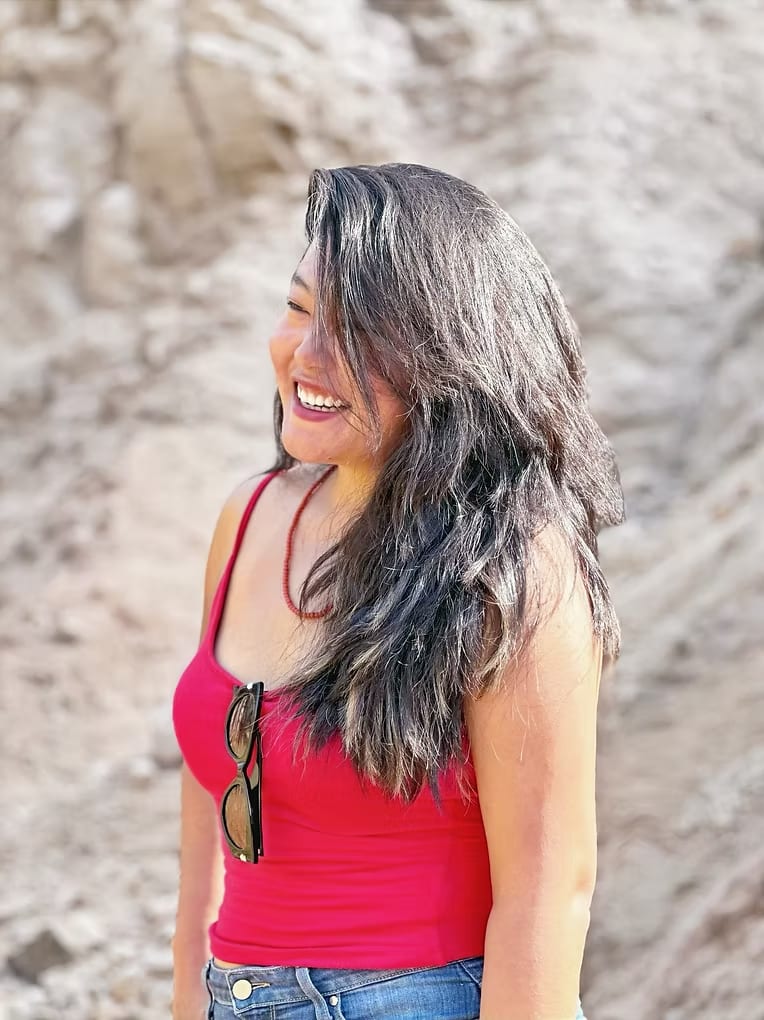
I am Fei, a SOAS trained anthropologist and ethnographer
I consider myself a life-long student of other lifeworlds. This curiosity led me into anthropology, and brought me from where I was born — the Tujia ethnic mountains in central China — to the other end of the Eurasia continent, also to many other locations around the world. I have conducted research with Javanese and Balinese permaculture farms; explored historic formations of psychotic/schizophrenic diagnostic categories in Indonesia; studied Chinese diviners and shamans; and apnea divers and Bedouin nomads in Sinai peninsula
I'm always on the journey to cultivate holistic wellbeing, build connections with myself, others and the world. I would love to share my knowledge and insights with you, to learn from you, and to connect you with like-minded others. Please don't hesitate to get in touch!
What can Anthropology do for us?
Anthropologists study about people, and their relationship with nature, other human beings and non-human beings. Understanding and nurturing these relationships are one of the most important challenges of today's world.
-
Our generation grew up with the language of "world
citizen", "cosmopolitanism", and "global
village", If we were to decipher cosmopolitanism as being
a “world citizen”, this concept that has received ample
attention from different disciplines since the post-war
development era and the era of “hyper globalisation” faces a
level of awkwardness.
-
On the one hand, cheaper international transport, accelerated flows of information through digital tools, growing potential of remote work, and developments of politico-legal infrastructures have made “world citizenship” more accessible than ever. The prospect of meeting and conversing in a cosmopolitan location remains a financial privilege but is no-longer reserved for the very few — especially if virtual communities are taken into account. On the other hand, cosmopolitanism is getting more “bad press”. It is often regarded as detached, aloof and elitist. There are feelings of being betrayed by the rhetoric of globalisation in civil societies across both Global North and South locations.
- In Western countries, we see growing discontentment, distrust towards institutions and bigotry towards minorities, immigrants and intellectuals. In locations of the Global South, there is growing animosity towards an abstract image of “the West” and vilification of vulnerable minorities for “being influenced by the West”. The world is polarising and the language of “a united humankind in one community” is under heavy scepticism. However, globalisation hasn’t hasn’t “failed” us in terms of economic statistics. Most countries in the world saw an upward shift in terms of income. There is ample literature on disparity of wealth across various disciplines, whereas the need for an evening of social status receives less attention. The discourse of cosmopolitanism is worthy of re-examination in such volatile times where anxiety and distrust between states, entities and people are growing. How can we discover new ways of coexisting as a human species.
Past Projects
The Other "AI": Anthropological Intelligence for a Better Life
In a nutshell, what ties my project together is my enthusiasm in translocative, transnational and transcultural communities that does not seek group bonding and identification through commonalities of race, nationality and religion. I believe emerging diversities of identities and communities across the world are particularly worthy of academic attention in an accelerating world where "crisis" has become a new "normal". Overall, my research interests span across STS, (studies of science and technology) anthropology of identity and relations, moral anthropology and critical political economy.
Oceanic Embodiments: Apnea Diving Practice in the Sinai Peninsula, Egypt
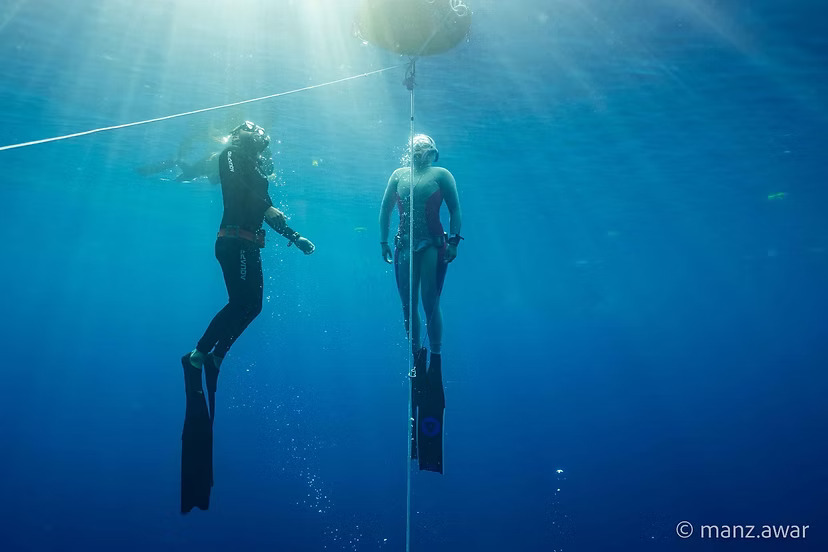
This research is the product of my MA fieldwork. I spent 9 months combined in Dahab during the past few years, conducting fieldwork with freedivers and training freediving myself. My research addresses how freedivers in Dahab find comfort in interacting with the sea I am looking at the embodied departures from land-centred narrative freedivers go through by being-at-sea. I'm also providing new insight for anthropological understandings of moral experiences centring on a variety of intersubjective moral experiences in which humans organically be-together otherwise; one that does not mainly take place with conversation, or some form of conversation --- what do freedivers learn from the sea and how does the experiences of being-at-sea impact their perception of life on land?
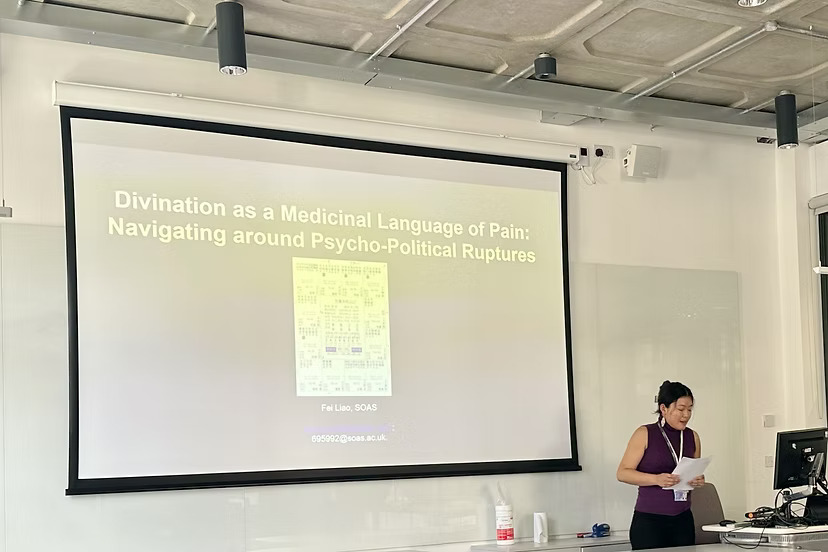
Divination as a Medicinal Language of Pain: Navigating around psycho-political ruptures
In early 2020, when the rest of the world has not yet been
"shellshocked" by the pandemic, a Weibo account
went viral for posting fortune-telling predictions on a
"widespread disease of the respiratory system".
There has been a longstanding fatalistic tradition of
mantic elements relating to collective and individual
misfortunes in China. These mantic languages are gaining a
new life in the post-pandemic world and geo-political
uncertainties we live in/with today.
This essay
wishes to examine the emergence of a popular
"divination vernacular" in China, using
divination language as an explanatory model. Building on
the notion that continuing experience of uncertainty
evokes psychic pain and real suffering that dwells in the
"between-places" of clinical and political
language, divination as an intersecting point of what is
psychological and what is political, provides a glance at
the psycho-politics of wellbeing in China today beyond
clinical encounters.
Tracing Madness and Psychosis in Indonesia: Beyond “Outcome Paradox”
Anthropologists have come to an agreement that the existential human experience such as “being mad” is situated across intricate social networks. This paper presents an auto-ethnography on the author’s personal experience dihantui (being haunted) and seeking exorcism in Yogyakarta, Indonesia. Reflecting on local and clinical understandings of madness and normalcy, this paper explores the making of madness as a form of exclusion. Combining ethnography and genealogical analysis on how madness as well as clinical labels of psychosis/ schizophrenia is made, this paper critiques “the outcome paradox” — that countries in the global south with lower health care spending and fewer resources achieving better outcomes than countries in the global north with higher spendings — for reducing dialectical differences on what constitutes as “symptoms” and what constitutes as “care”.
_zfmx_s80ECzJo-bDRwQza.jpg)